Written by: Kiersten ‘KiKi’ Szymecki, MSW Policy Intern
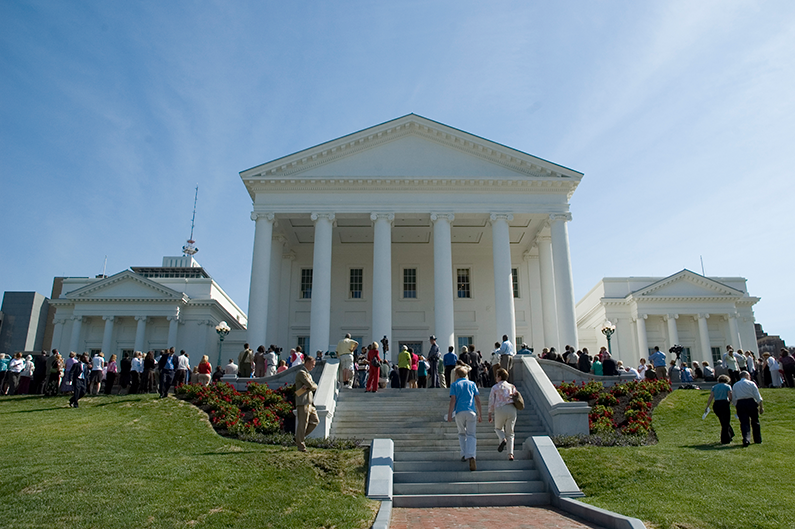
The 2026 General Assembly session adjourned on March 14. This is one of the busiest times of year for everyone working in advocacy, as the Senate and House of Delegates, along with their legislative staff, review thousands of bills, often multiple times. Throughout the session, advocates, lobbyists, and community members fill the halls of the State Capitol and General Assembly Building, engaging legislators and organizations in ongoing discussions to analyze, clarify, and interpret complex or ambiguous legislation. Mental Health Virginia was among other stakeholders as we actively tracked and collaborated with the community surrounding proposed legislation.
Some of the overarching themes we noticed in the legislative initiatives this year include:
- Policymakers are acknowledging inequities in mental health outcomes and starting to design policies accordingly.
- The conversation is shifting from “more services” to “can people actually access them?”
- Virginia continues its transition toward a “Right Help, Right Now” model moving away from police-first responses to tiered, health-centered crisis care.
- Mental health is being treated as a cross-sector issue, not just a healthcare
Mental Health Virginia monitored over 100 bills during this session; you can see which ones per our legislative tracker. MHV also participated in several workgroups, collaborating with diverse community stakeholders on a range of initiatives aimed at improving quality of life and expanding access to mental health support for Virginians. These bills collectively push for a system that is more compassionate, more equitable, and more accessible – one that recognizes health conditions (mental, cognitive, and physical) as central to how laws, insurance, and care systems should operate.
Here are some of the bills Mental Health Virginia has been supporting through workgroup participation.
HB246 & SB335 highlight the need to humanize the legal system and decriminalize crisis responses. These bills focus on establishing an affirmative defense for individuals with neurocognitive disorders or those experiencing a mental health crisis who are charged with assault and battery against protected persons. By emphasizing a person’s mental state and circumstances, this legislation seeks to prevent disproportionate legal consequences for behaviors that occur during moments of distress, reinforcing the idea that crisis should be treated as a health issue rather than solely a criminal matter.
HB625 & SB161 emphasize affordability and health equity across conditions. By proposing a cap on out-of-pocket prescription costs, these bills address a major barrier to care faced by individuals with chronic illnesses, rare diseases, and mental health conditions. This effort underscores the broader theme that access to necessary medication should not be determined by financial means, and that all health conditions deserve equitable consideration in policy solutions.
HB656 & SB524 focus on insurance reform and mental health parity. These bills aim to ensure that mental health services are covered on par with physical health services, improving both affordability and access to care. Additionally, by addressing issues such as reimbursement barriers and retroactive denials, the legislation has the potential to increase the number of providers who accept insurance, ultimately expanding access to mental health services.
What’s interesting about this session is that Virginia lawmakers have not yet agreed on a final state budget. The major hold up is attributed to the divide between the House and Senate over data center tax breaks. Legislation from 2010 provides a tax exemption that was initially thought to have minimal negative impact on Virginia’s budget. However, as more data centers rolled in, the amount of forgone state revenue ballooned to over 1 billion. This is where a division in opinions lies.The Senate supports ending the previously agreed-upon exemption before its 2035 expiration, while the House argues that doing so could signal that Virginia is going back on its word and potentially drive data centers to locate elsewhere.
Governor Spanberger has called a special session on April 23 where Virginia lawmakers will reconvene in an effort to finalize the state budget. Check back here for an update!